


Energy Saving Blinds: How the Right Blind System Reduces Heating and Cooling Costs
Fabric matters, but it is not the whole story. Learn how a fully sealed, track-guided blind system delivers insulation performance that fabric alone cannot achieve.
Heating and cooling account for a significant share of home energy use in Australia. Windows and glazed openings are among the largest contributors to heat gain in summer and heat loss in winter, and what covers them makes a measurable difference to how hard a home’s heating and cooling system has to work.
Energy saving blinds are one of the more practical ways to address this. The right blind, fitted correctly, creates a layer of insulation between the interior of a room and the glass. But the insulation performance of any blind system depends on more than the fabric alone. The way the blind is mounted, sealed and held in place plays an equally important role, and it is here that Ziptrak®’s track-guided design stands apart.
Seasonal energy impact
How Blinds Affect Heat Gain in Summer and Heat Loss in Winter
Glass is not an efficient insulator. On a hot Australian summer day, solar radiation passes through a window and heats the interior of a room, increasing the load on air conditioning. On a cold winter night, heat generated inside the home escapes through the same glass, requiring the heating system to work harder to maintain a comfortable temperature.
A well-fitted blind addresses both directions of heat transfer. In summer, it limits the amount of solar energy entering the room. In winter, it creates an additional barrier that slows the rate at which warmth escapes. The result, in both cases, is a reduced reliance on mechanical heating and cooling, which translates directly to lower energy consumption and lower running costs.
Summer: reducing heat gain
A blockout or heat-reflective blind fabric can significantly limit the amount of solar radiation entering a room through glass. Less heat entering the room means the air conditioning runs less frequently and for shorter periods to maintain the same temperature.
Winter: limiting heat loss
In cooler months, a well-fitted blind creates a still air buffer between the room interior and the window surface. This additional thermal barrier slows the rate at which warmth radiates out through the glass, helping to maintain comfortable indoor temperatures with less energy input.
Reduced energy costs
A heating and cooling system that runs less often and for shorter periods uses less electricity and gas. Over the course of a year, particularly in climates with hot summers and cold winters, this saving adds up across every room where energy saving blinds are fitted.
Reduced reliance on systems
Beyond the financial benefit, reducing mechanical heating and cooling use also lowers a household’s overall energy demand. Passive insulation through well-fitted window coverings is one of the more straightforward ways to make a home more energy efficient.
Why the system matters
Good Insulation Performance Requires More Than Fabric
When most people think about energy saving blinds, they think about the fabric. And the fabric does matter: different materials have different thermal and solar properties, and choosing the right fabric for a room’s orientation and use is important. But fabric performance alone does not determine how well a blind insulates.
The critical factor is how well the blind seals the window opening. Any gap, at the sides, the top or the bottom, allows air to move freely between the warm side of the room and the cooler air trapped against the glass. This convective loop significantly reduces the effective thermal performance of the blind, regardless of how well the fabric itself performs.
A high-performance fabric fitted with gaps around the edges will not deliver high-performance insulation. The seal is as important as the material.
This is the distinction that defines Ziptrak®’s approach to interior blind design. The track-guided system is engineered to address the whole window opening, not just the area covered by the fabric.
The Ziptrak® difference
How Ziptrak®’s Track-Guided Design Delivers Superior Insulation
Ziptrak® interior blinds use a fully sealed, track-guided design in which the fabric is secured within side tracks, channels and a pelmet. This configuration minimises the gaps that would otherwise allow warm or cold air to move between the room and the window, maintaining the integrity of the insulating air layer the blind is designed to create.
Side tracks that retain the fabric — The fabric runs inside dedicated side tracks rather than hanging freely. This keeps the edges of the blind in consistent contact with the window surround, closing off the pathways through which air would otherwise circulate around the sides of the blind.
Pelmet coverage at the top — A pelmet above the blind closes the gap between the top of the fabric and the ceiling or wall, preventing warm air from spilling over the top of the blind and losing contact with the window surface.
Fabric secured against air movement — Because the fabric is held within the tracks, it stays in position even when there is air movement in the room. A blind that remains flat and taut against the window maintains its insulating air gap consistently, rather than billowing away from the glass and breaking the seal.
A complete thermal barrier — Together, the fabric, side tracks, channels and pelmet work as a system. Each component contributes to a more complete seal around the window opening, delivering insulation performance that the fabric alone, fitted without this system, could not achieve.
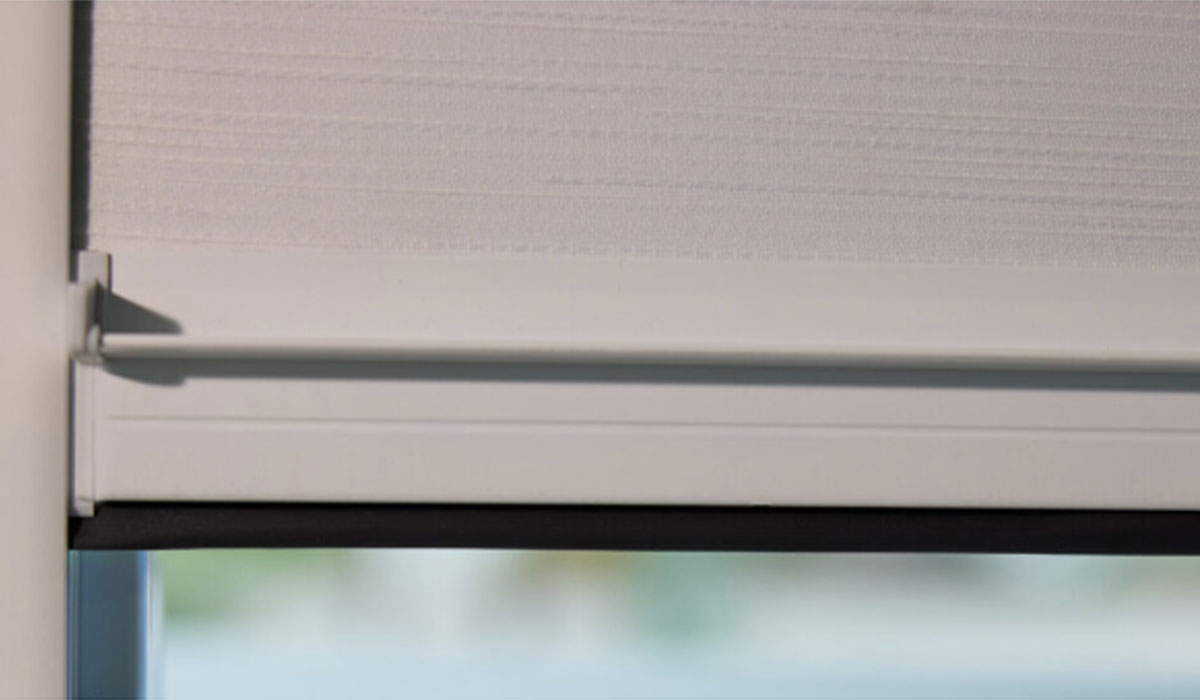
See how the Ziptrak® track-guided system keeps fabric securely retained within the side tracks, even under air pressure. More detail at Interior Features.
Reliable, consistent performance
Why Fabric That Stays in Position Matters for Insulation
A blind that lifts, shifts or separates from the window surround during ordinary use stops functioning as an insulator in those moments. Air moves through the gap, the thermal buffer is broken, and the energy saving benefit of the blind is reduced. For a blind to contribute meaningfully to a home’s energy efficiency, it needs to maintain its position and its seal consistently, not just when conditions are ideal.
The Ziptrak® track-guided system is designed with this in mind. The fabric is held within the tracks rather than resting against them, which means normal airflow in the room, from doors opening, fans running or ventilation systems operating, does not cause the fabric to separate from the window surround. The blind stays where it is positioned, maintaining the seal that makes it effective as an energy saving blind.
Fabric retained within side tracks maintains consistent edge contact with the window surround, preserving the insulating air layer.
The blind stays taut and flat against the window in normal household conditions, rather than lifting away and breaking the seal.
Consistent positioning means consistent performance, season after season, without adjustment or reinstallation.
Because the fabric moves within the tracks rather than straining against them, the system experiences less mechanical stress during everyday operation, contributing to long-term durability and reducing the likelihood of wear, damage or the need for ongoing repairs.
Professional installation by an authorised Ziptrak® retailer ensures the system is correctly fitted from the outset, maximising both insulation performance and long-term reliability.
Common questions
FAQs: Energy Saving Blinds and Insulation Performance
Want to explore fabric options and configurations for your home? Use the Ziptrak® Design Your Blind tool to compare fabrics and colours before speaking with a local retailer.
Design Your Blind →Ready to get started?
Find a Ziptrak® Retailer Near You
Speak with a local authorised Ziptrak® retailer about energy saving blind options for your home. Professional measuring and installation included.
Find a Retailer Near You