

Blinds Guide: Best Types of Blinds by Room (Bedroom, Living, Office, Alfresco)
Blinds Guide: Best Types of Blinds by Room (Bedroom, Living, Office, Alfresco)
A practical room-by-room guide to choosing the right blinds for light control, privacy, heat management and comfort across every part of your home.
Choosing the right blinds comes down to understanding what each room actually needs. A bedroom has different requirements to a living room, and a home office has different priorities again. The wrong blind in the wrong room means either too much light, not enough privacy, or a fabric that degrades faster than it should.
This guide covers the best blinds for every room in the home, from bedrooms and living areas to home offices and alfresco spaces. It also covers the five factors that matter most when choosing any blind, plus how to avoid the most common measuring and installation mistakes. Ziptrak® blinds are available through retailers across Australia, and the information below will help you walk into any consultation already knowing what to ask.
Scan first
Quick Decision Table: Best Blinds by Room
Not sure where to start? Use this table to match your room to its primary need and the blind type most likely to deliver it.
👆 Swipe to scroll
| Room | Primary need | Recommended blind type |
|---|---|---|
| Bedroom | Light blockout, privacy, sleep quality | Blockout interior blind |
| Nursery | Darkness, quiet operation | Motorised blockout interior blind |
| Living room | Glare reduction, comfort, view preservation | Sunscreen or light-filtering blind |
| Home office | Screen glare control, focus | Dim-out or sunscreen blind |
| West-facing room | Afternoon heat and glare | Blockout with reflective-white backing |
| Alfresco / outdoor area | Weather protection, privacy, year-round use | Outdoor blind |
| Home theater | Viewing experience | Blockout interior blind |
| Hard-to-reach windows | Light control, ease of operation | Motorised light-filtering blinds |
Each of these room types is covered in detail below, so you can jump straight to the section that matches your space. Whether you’re looking for outdoor or interior blinds, Ziptrak® offers a wide range of solutions to suit every room. With our extensive network of retailers across Australia, finding the right blinds for your home or business is simple, just find a retailer near you and explore the best solution.
Bedroom and nursery
Bedroom Blinds: Sleep and Privacy First
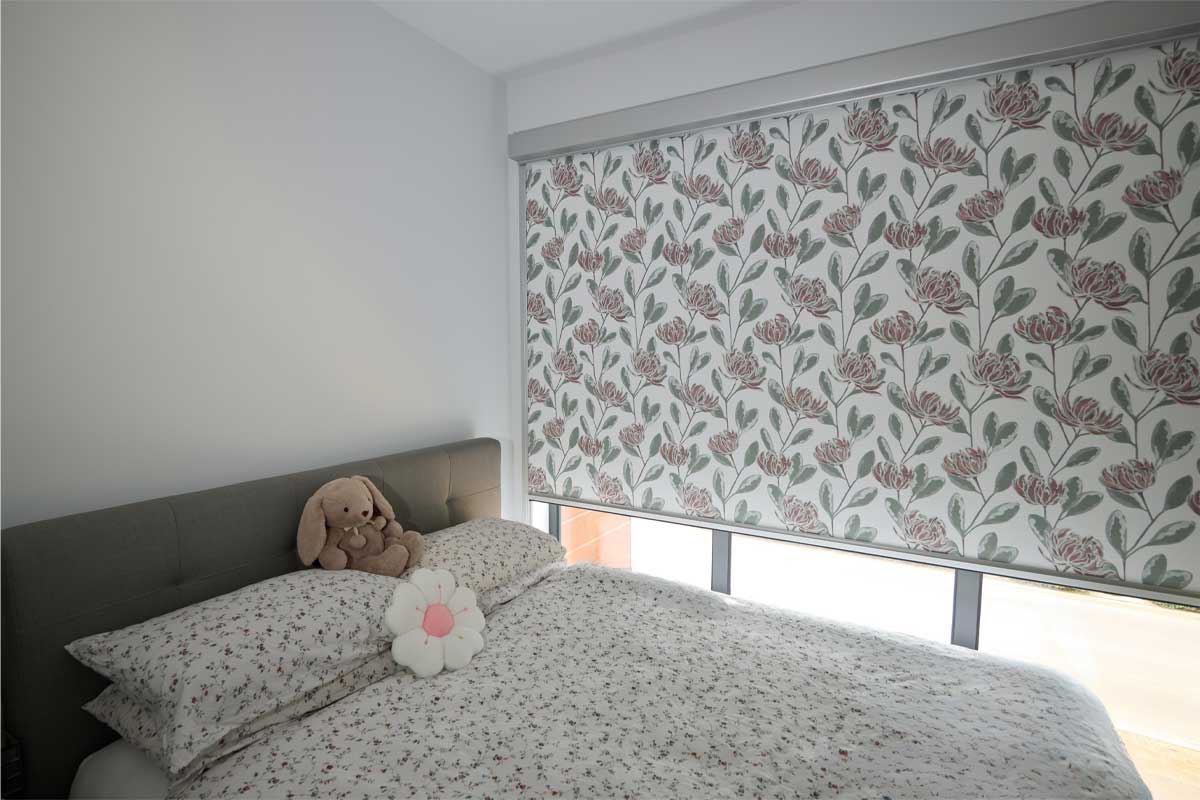
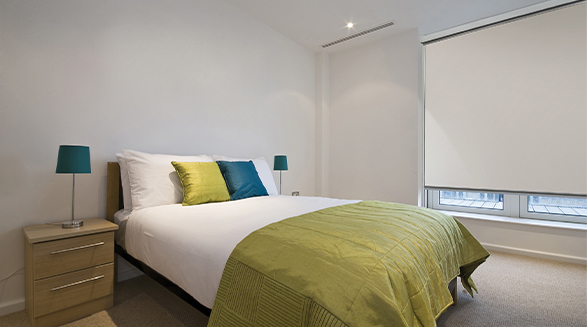
The bedroom is the one room where light control is non-negotiable. Whether it’s early morning sun, streetlights at night, or long summer evenings that push past 8pm, the best blinds for a bedroom prioritise genuine darkness and full privacy above everything else.
Blockout blinds are the most effective choice for bedrooms. They use a light-inhibiting fabric lining rated to block 99 to 100 per cent of light transmission through the material itself. However, light can still enter around the edges of a blind that is incorrectly sized or mounted, which is why fit and installation matter just as much as fabric choice.
Blockout fabric — blocks 99 to 100% of light through the material and provides full day and night privacy.
Custom sizing — a blind cut to the exact dimensions of your window opening minimises side light gaps from the outset.
Motorised operation — particularly useful in nurseries and children’s rooms where quiet, one-touch control matters during feeds or early mornings.
Installation — having your blinds installed by experts guarantees precise alignment, smooth operation, and long-lasting performance.
For shift workers, families with young children, or anyone in a house that receives early morning light from the east or lingering evening sun from the west, a quality blockout blind is one of the most practical home improvements available.
Living room and lounge
Living Room Blinds: Glare Control and Comfort
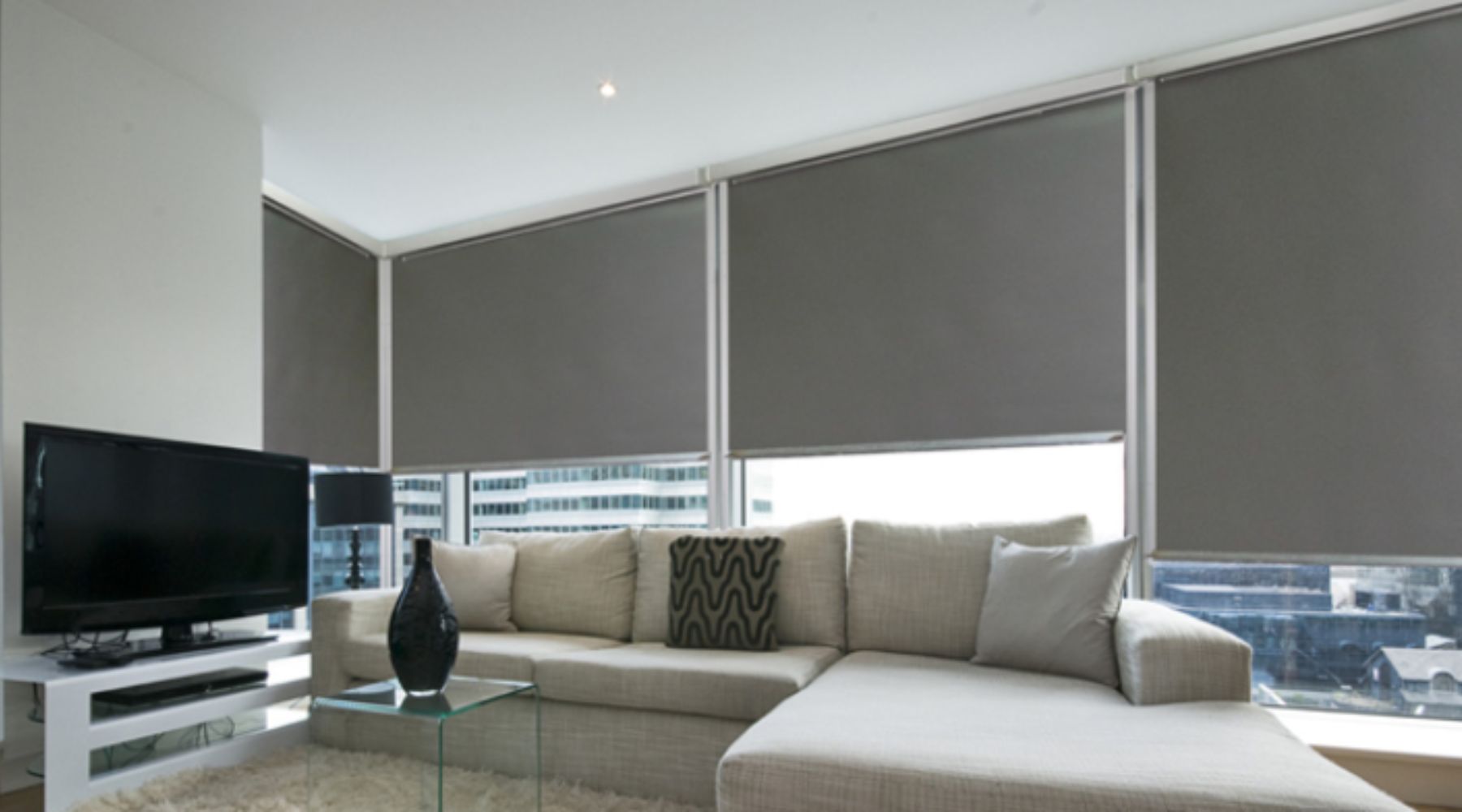
The living room presents a different set of priorities to the bedroom. Total darkness is rarely the goal. Most people want to reduce glare on screens and surfaces while keeping the room feeling bright and connected to the outdoors. The best blinds for living rooms balance light filtering with view preservation and privacy.
Sunscreen fabrics
Allow diffused light in while reducing glare. You can still see outside during the day and the room stays bright without the harsh reflection on TV and phone screens.
Afternoon sun and heat
West-facing living rooms receive intense direct sun from early afternoon through early evening. A sunscreen or blockout blind with a reflective-white backing can noticeably reduce heat gain and cut cooling costs during peak summer hours.
Night-time privacy
Sunscreen fabrics that appear opaque from outside during the day can become transparent at night when interior lights are on. If night-time privacy is a priority, a blockout or opaque fabric is the more reliable choice.
Style and finish
Living room blinds are often more visible than bedroom blinds, so fabric colour and texture become more relevant. A local Ziptrak® retailer can show you samples in the context of your room’s existing colours and finishes.
For living rooms that face west or north and receive sustained direct sun across the warmer months, blinds for living rooms should prioritise heat management alongside glare control. Specifying a fabric with a heat-reflective backing will make a meaningful difference on days above 35°C.
Home office and study
Home Office Blinds: Screen Glare and Focus
Office glare blinds are one of the most underrated home improvement decisions for anyone working from home. Glare on a monitor screen causes eye strain, affects concentration and makes video calls harder to manage. The right blind makes a significant practical difference to both comfort and productivity.
The challenge with home office windows is that light conditions change across the day. Morning east-facing light, afternoon west-facing sun and overhead skylights all create different glare problems at different times. The ideal solution controls light without making the room feel dark or enclosed.
Dim-out fabrics — reduce light significantly without full blockout, keeping a comfortable working environment without closing the room down entirely.
Sunscreen fabrics — reduce glare and heat gain while preserving natural light. The openness factor of the weave determines how much light and view is retained.
Light control vs reflection — reducing the amount of light entering the room differs from reducing reflections on a screen. Positioning the blind to intercept direct light before it hits the screen is more effective than blocking the entire window.
Motorised options — useful for home offices where light conditions shift across the day and adjusting blinds manually would interrupt work.
If your home office faces west, heat becomes a factor as well as glare. A blockout or dim-out blind with a reflective backing will reduce both the thermal load and the reflected light problem simultaneously.
With Ziptrak®, you can have unlimited fabric options, so you can choose the perfect colour, texture and transparency to suit your style, light preferences, and functional needs. Find a retailer near you to explore the range and see the fabrics in person.
Alfresco and outdoor areas
Alfresco Blinds: Weather, Privacy and Year-Round Use
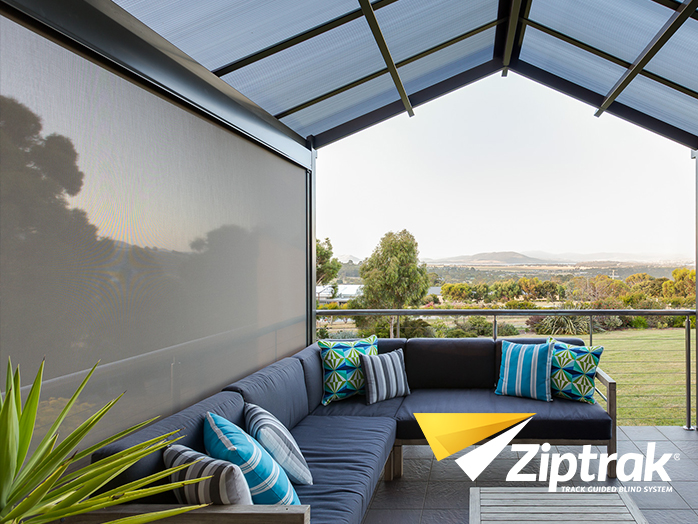
Alfresco and outdoor blinds serve a different purpose to interior window coverings. They are designed to extend the usability of outdoor spaces by providing protection from wind, rain, sun and insects while maintaining ventilation and connection to the garden or view.
Ziptrak® is the original track-guided blind system in Australia and is particularly well-suited to alfresco applications. The track-guided design holds the fabric under consistent tension at the sides, which means the blind performs in wind and weather rather than flapping or losing shape. For outdoor areas used year-round, this makes a significant difference to both performance and longevity.
Weather protection
Outdoor blinds shield alfresco areas from wind-driven rain, reducing the amount of weather that enters the space and extending the number of days per year the area is comfortably usable.
Sun and UV control
Sunscreen mesh fabrics help control sun and UV exposure, making outdoor areas comfortable even in peak summer heat without closing off the space. Clear PVC protects against UV while allowing uninterrupted views.
Privacy from neighbours
In urban and suburban settings, alfresco blinds provide a privacy screen that allows outdoor entertaining without being overlooked from adjoining properties or the street.
Track-guided stability
The Ziptrak® track system keeps fabric in place under wind load, unlike free-hanging outdoor blinds that billow, lift or lose tension in conditions above a light breeze.
A local Ziptrak® retailer can advise on the right combination for your climate, aspect and how the space is used.
What to look for
The 5 Things That Matter When Choosing Blinds
Regardless of which room you’re fitting out, the same five factors determine whether a blind delivers long-term value or falls short of expectations.
Light control
Decide whether you need full blockout, significant reduction, or glare management. The answer determines the fabric type before anything else, and it varies by room and by orientation.
Privacy
Consider both day and night-time privacy. Sunscreen fabrics that appear opaque during daylight hours can become transparent at night. Blockout and opaque fabrics provide consistent privacy around the clock.
Heat management
In Australian conditions, unshaded glass is a significant source of heat gain in summer. A fabric with a reflective-white backing can reduce solar heat load through glass and support your cooling system.
Cleaning
Most interior blinds only need a damp cloth to stay clean, but outdoor blinds face more dirt and sun. Ziptrak® Swiftee® makes cleaning SunScreen Mesh and Clear PVC fast and easy.
Durability
The operating mechanism and fabric quality determine how long a blind performs before requiring attention. Cord-free systems like Ziptrak® reduce wear points and maintenance requirements compared to cord or chain-operated alternatives.
Getting it right
Measuring and Installation: How to Avoid Common Mistakes
Incorrect measurements and poor installation are the two most common reasons blinds underperform once they are in place. A fabric can be correctly specified for a room and still let in significant light, fail to provide full privacy, or look wrong, simply because the blind was not measured or installed with enough precision.
Measure width and height at multiple points across the opening. Window openings are rarely perfectly square, and using the wrong measurement can result in a blind that does not seat correctly or leaves gaps at the edges.
Professional measuring and installation through a retailer removes the guesswork and ensures the blind is ordered to the exact right specification the first time. Find a Ziptrak® retailer near you to get expert guidance.
Related pages
Common questions
FAQs: Choosing the Right Blinds
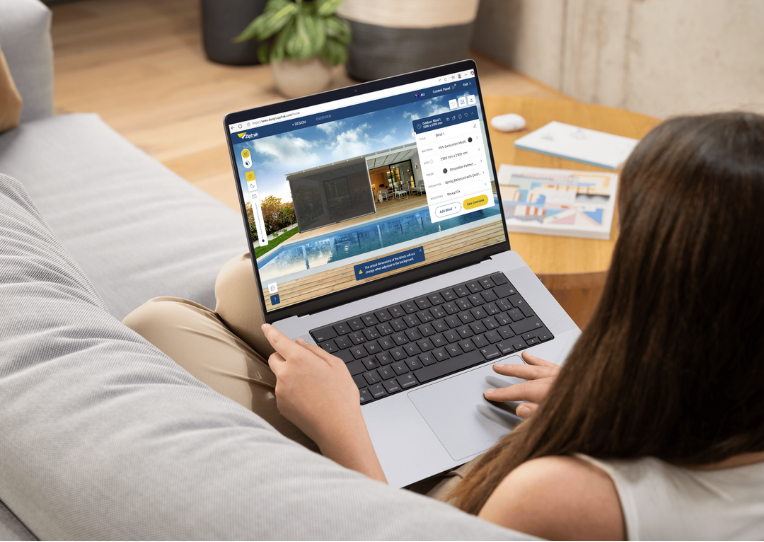
Not sure which fabric or configuration is right for your room? Use the Ziptrak® Design Your Blind tool to explore fabric options, colours and blind types before speaking with a retailer.
Design Your Blind →Ready to get started?
Get Help Choosing the Right Blinds for Your Home
Speak with a local Ziptrak® retailer for expert advice, a free measure and a no-obligation quote. Browse the full range first, then connect with a retailer near you.
Find a Retailer