

Are Outdoor Blinds Waterproof?
Are Outdoor Blinds Waterproof?
The short answer depends on the fabric. Here’s what you need to know about waterproof outdoor blinds, water-resistant mesh and how the Ziptrak® track-guided system keeps rain out.
Whether outdoor blinds are waterproof is one of the most common questions homeowners and venue operators ask before buying. The answer depends entirely on the fabric — and understanding the difference between waterproof outdoor blinds and water-resistant ones will help you choose the right option for your outdoor space before you spend anything.
This guide covers how sunscreen mesh and clear PVC compare for rain protection, how Ziptrak®’s track-guided system reduces water entry from the sides, and which fabric is the right choice depending on what you need from your outdoor area.
Understanding the terminology
What Does “Waterproof” Mean for Outdoor Blinds?
In the context of outdoor blinds, waterproof means water cannot pass through the fabric itself. A waterproof blind will block rain from penetrating the material under normal conditions. Water-resistant means the fabric repels light rain and reduces moisture penetration, but the material structure allows some water through — particularly in heavier rainfall or when the blind is under sustained water pressure.
The distinction matters because the two most common outdoor blind fabrics — sunscreen mesh and clear PVC — sit on opposite ends of this spectrum. Knowing which category each falls into is the starting point for choosing the right blind for your specific weather conditions and how you use the space.
Even with a waterproof fabric, water can still enter an outdoor area through gaps around the edges of a blind that is not properly sealed. The fabric is only part of the rain protection story — the installation method matters just as much.
Fabric comparison
Water-Resistant Mesh vs. Waterproof Clear PVC
The two fabric types used in Ziptrak® outdoor blinds handle rain differently. Here is how they compare across the factors that matter most for weather protection.
🕸️ Sunscreen Mesh
Water resistance: Water-resistant, not waterproof. The open weave of the fabric allows air and some light through — and in heavy rain, it also allows some water through.
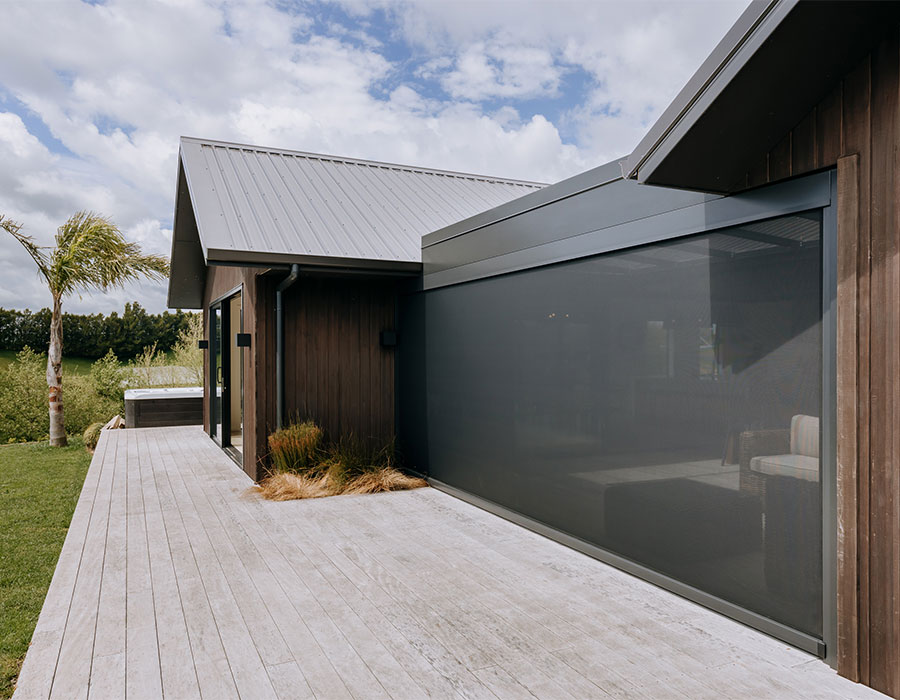
Best for: Heat, glare and UV control. Mesh reduces solar radiation significantly while maintaining airflow, making it the most popular choice for alfresco dining areas used primarily in warmer weather.
Rain performance: Effective against light rain and wind-driven drizzle. In sustained heavy downpours, some water will pass through the fabric. Mesh is not the right choice if rain protection is the primary requirement.
Airflow: Excellent. The open weave allows natural ventilation to continue even when the blind is fully closed.
🪟 Clear PVC
Water resistance: Waterproof. Water does not pass through the solid PVC material. Clear PVC is the right choice when rain protection is the priority.
Best for: All-weather enclosure, alfresco dining venues, balconies and outdoor areas used year-round including in wet weather. Also popular for outdoor café blinds where wet weather trading is commercially important.
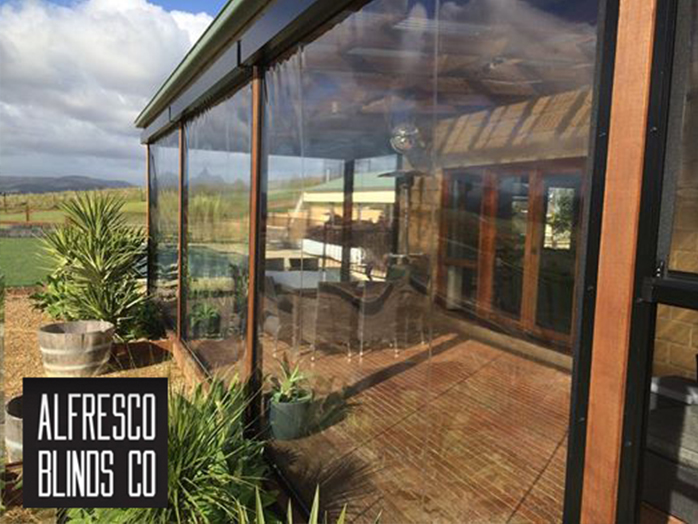
Rain performance: Excellent. Clear PVC blocks rain from passing through the fabric entirely. Combined with a track-guided system that seals the edges, it provides the most complete weather protection available in an outdoor blind.
Airflow: Minimal when closed. In warm weather, PVC blinds are typically raised or partially lowered to allow ventilation.
The Ziptrak® difference
How the Ziptrak® Track-Guided System Improves Rain Protection
The fabric is only part of what determines how waterproof an outdoor blind actually is in practice. The way the blind seals around the sides of the opening is equally important — and this is where Ziptrak®’s track-guided system makes a significant difference over standard free-hanging outdoor blinds.
No side gaps — The fabric is guided within slim side channels rather than hanging freely. This eliminates the open gaps at the edges that allow wind-driven rain to enter regardless of which fabric is used.
Stays sealed in wind — Free-hanging blinds lift and separate from the frame in wind, opening large gaps through which rain enters. The track-guided fabric stays flat and in contact with the channel regardless of wind conditions.
Consistent tension — The spring-balanced system keeps the fabric under consistent tension at all heights, maintaining the seal against the side tracks whether the blind is fully lowered or stopped partway.
Bottom seal — When fully lowered, the bottom bar of the blind sits close to the ground or deck surface, reducing the gap through which wind-driven rain can enter from below.
The practical result is that a Ziptrak® clear PVC blind provides very effective rain protection from the sides, top and through the fabric itself. A Ziptrak® mesh blind provides significantly better rain resistance from the sides than a free-hanging mesh blind, even though the fabric itself is still water-resistant rather than waterproof.
Not sure whether mesh or clear PVC is right for your outdoor area? Use the Ziptrak® Design Your Blind tool to explore fabric options before your consultation with a local retailer.
Design Your Blind →Making the right choice
Which Fabric Is Right for Your Outdoor Area?
The choice between mesh and clear PVC comes down to what you need the blind to do most of the time, and in what conditions you most want to use your outdoor area.
Choose mesh if…
Heat, glare and UV control are your primary concerns, and rain protection is secondary. Mesh is ideal for outdoor areas used mainly in fine weather and warmer months, where airflow is important for comfort.
Choose clear PVC if…
Rain protection and all-weather enclosure are the priority. PVC is the right choice for outdoor areas used year-round, in wet climates, or where the space needs to remain functional during rain events.
Consider mixing fabrics
Different sides of the same outdoor area can use different fabrics. Mesh on the sun-facing side for glare control and clear PVC on the weather-exposed side for rain protection is a common and practical combination.
Commercial venues
For cafés, restaurants and hospitality venues where trading through wet weather is a commercial priority, clear PVC is almost always the right choice. It keeps guests comfortable in rain while preserving street presence and visibility.
Your local Ziptrak® retailer will assess your outdoor area and advise on the fabric combination that best suits your specific conditions, orientation and how you use the space across the seasons.
Common questions
FAQs: Are Outdoor Blinds Waterproof?
Ready to get started?
Find a Local Ziptrak® Retailer
Get expert advice on waterproof outdoor blinds for your home or venue. Professional measure, fabric recommendation and installation included.
Find a Retailer Near You