


Choosing the Right Outdoor Shading: Awnings vs Roller Shades vs Track-Guided Blinds
Not all outdoor shading works the same way. Here’s how to compare your options and choose the right solution for your patio, alfresco or balcony.
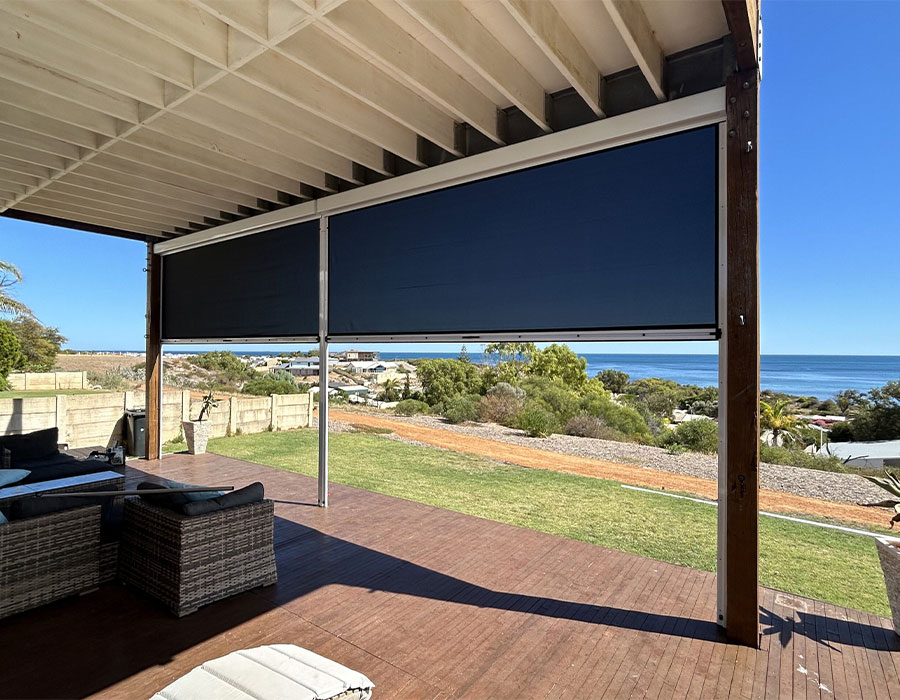
Choosing the right outdoor shading is one of the more consequential home improvement decisions an Australian homeowner makes — not because it is especially complicated, but because the wrong choice means an outdoor area that still gets too hot, too windy or too wet to use when you need it most. The right outdoor shading extends the usable season of a patio or alfresco area significantly and makes it a genuine extension of the living space rather than a space you retreat from when conditions change.
The three main options most homeowners consider are awnings, standard roller shades and track-guided outdoor blinds. Each addresses different problems and has different performance characteristics in Australian conditions. This guide compares them clearly so you can make a decision based on what your outdoor area actually needs.
Start here
What Problem Are You Trying to Solve?
Before comparing outdoor shading options, it helps to be clear about what the outdoor area actually needs. Different shading solutions address different problems, and choosing the right one starts with identifying your primary requirement.
Sun and heat overhead — An overhead cover such as a pergola, roof or retractable awning addresses this directly. Vertical blinds help with low-angle sun and heat through glass but do not shade from directly above.
Wind and lateral rain — Only vertical side covers address wind and rain from the sides. Awnings and overhead covers alone leave the sides exposed, so the space remains uncomfortable in windy or wet conditions.
Privacy — Vertical outdoor blinds provide a privacy screen from neighbours and the street. Awnings and overhead shading do not address horizontal privacy at all.
Insects — Vertical blinds that seal the perimeter of an outdoor area reduce insect entry significantly. Overhead shading has no impact on insect protection.
Most outdoor areas benefit from a combination of overhead cover and vertical side shading. The question is which vertical shading option is the right fit once the overhead solution is in place.
Comparing your options
Awnings, Roller Shades and Track-Guided Blinds: How They Compare
🏠 Awnings
Awnings are fixed or retractable covers that extend horizontally or at an angle from a wall to shade a space from above. They are typically mounted above a window or door opening and project outward to block the sun before it reaches the glass.
Strengths: Effective at blocking overhead sun and reducing solar heat gain through adjacent windows. Retractable versions fold away when not in use. Good for providing shade across a large horizontal area from a single unit.
Limitations: Awnings shade from above only. They provide no protection from wind, lateral rain, insects or low-angle sun coming from the sides. In windy conditions, retractable awnings typically need to be retracted to avoid damage. They do not address privacy.
🪟 Standard Roller Shades
Standard outdoor roller shades are vertical blinds that lower from a roller at the top of an opening. They use sunscreen mesh or PVC fabric and can be raised or lowered to adjust shading and privacy. Most standard roller shades are free-hanging, meaning the fabric is not connected to any side track or channel.
Strengths: Addresses sun, glare and some privacy on the side of the opening they face. Lower cost than track-guided systems. Available in a range of fabrics.
Limitations: Free-hanging blinds leave gaps at the sides through which wind, rain, insects and dust enter. In windy conditions the fabric billows away from the frame, significantly reducing weather protection. The loose edges mean even when the blind is down, it does not fully enclose the space.
🔲 Track-Guided Outdoor Blinds (Ziptrak®)
Track-guided outdoor blinds use the same roller mechanism as standard shades but retain the fabric within slim side channels that run the full height of the opening. Ziptrak® is the original track-guided outdoor blind system in Australia. The fabric is guided and held under consistent tension within the side tracks rather than hanging freely.
Strengths: No side gaps — the fabric seals against the channels across the full height of the opening. Stays flat and taut in wind rather than billowing away from the frame. Provides effective protection against wind, rain, insects and dust in addition to sun, glare and privacy. Can be stopped at any height with a single smooth motion. Optional motorisation for larger openings. Explore the full range of outdoor blind options, styles and accessories on the Ziptrak® website.
Limitations: Requires professional installation by a Ziptrak® retailer to achieve the correct seal and track alignment.
Exploring outdoor shading options for your space? Use the Ziptrak® Design Your Blind tool to preview fabric colours and configurations before speaking with a local retailer.
Design Your Blind →At a glance
Quick Comparison: Outdoor Shading Options
👆 Swipe to scroll
| Feature | Awning | Roller Shade | Track-Guided (Ziptrak®) |
|---|---|---|---|
| Sun and glare control | ✓ Overhead only | ✓ Facing side | ✓ Facing side |
| Wind protection | ✗ | Partial — gaps at sides | ✓ Sealed side channels |
| Rain protection | ✓ Overhead only | Partial — gaps at sides | ✓ Sealed sides and fabric |
| Privacy | ✗ | ✓ Partial | ✓ Full |
| Insect barrier | ✗ | Partial — gaps at sides | ✓ Sealed perimeter |
| Wind stability | Often retract in wind | Billows in wind | ✓ Stays flat in wind |
| Motorisation option | ✓ | ✓ | ✓ |
Making your decision
How to Choose the Right Outdoor Shading for Your Home
For outdoor areas that need year-round usability across Australia’s variable weather, a track-guided system addresses the widest range of conditions in a single installation. If your primary concern is overhead sun only, and the outdoor area is sheltered from wind and rain, a retractable awning may be sufficient. For most covered patios and alfresco areas, the combination of an overhead structure and Ziptrak® track-guided blinds on the sides delivers the best all-round performance.
Many homeowners use awnings and track-guided blinds together — the awning addresses overhead sun, the blinds address side wind, rain, privacy and insects. The two systems complement each other rather than compete.
A local Ziptrak® retailer will assess your outdoor area, discuss your priorities and recommend the right fabric and configuration for your specific conditions. When choosing the right outdoor shading, custom-made track-guided blinds professionally installed by a Ziptrak® retailer are the most complete vertical outdoor shading solution available for Australian homes and businesses.
Related pages
Common questions
FAQs: Choosing Outdoor Shading
Ready to get started?
Find a Local Ziptrak® Retailer
Get expert advice on the right outdoor shading solution for your home. Professional measure, fabric recommendation and installation included.
Find a Retailer Near You