


Outdoor Blinds Adelaide: Weather, Comfort and Privacy Guide for Local Homes
Adelaide’s climate is one of the most demanding in Australia for outdoor spaces. Here’s how to choose outdoor blinds that actually perform year-round in local conditions.
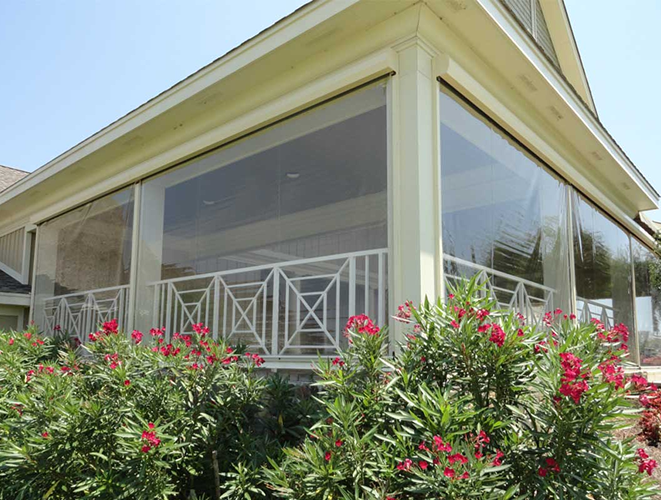
Adelaide homeowners know their outdoor areas can be brilliant in autumn and spring and genuinely uncomfortable in January and July. The city’s climate brings prolonged dry heat in summer, cold and wet winters, persistent north winds and, for coastal suburbs, regular sea breezes and salt-laden air. Choosing the right outdoor blinds in Adelaide means accounting for all of these, not just the sunny days.
This guide covers how Adelaide’s specific weather conditions affect what to look for in outdoor blinds in Adelaide, how blinds handle privacy across different suburb types, and the common ways Adelaide homeowners use them, from inner-city courtyards to coastal homes and Hills properties. Ziptrak® outdoor blinds are available through Ziptrak® retailers across Adelaide and South Australia.
Local conditions
How Adelaide’s Weather Affects Outdoor Areas
Adelaide sits in a Mediterranean climate zone, which means hot dry summers and mild to cool wet winters with a distinct shoulder season either side. For outdoor living, this creates a range of challenges that vary by season and by location across the metro area.
Summer heat and UV
Adelaide regularly records days above 40°C, and UV levels are among the highest in the world during the summer months. Unshaded outdoor areas become unusable during the middle of the day, and heat builds quickly in enclosed spaces facing north or west.
Wind exposure
Persistent northerly winds bring dry heat from the interior during summer. Sea breezes off Gulf St Vincent arrive in the afternoon, particularly in coastal suburbs from Semaphore to Glenelg. Both affect how comfortable an outdoor area is and how outdoor blinds need to perform.
Winter rain
Adelaide’s winter rainfall is concentrated between June and August. Alfresco areas without side enclosure become wet and uncomfortable quickly when southerly fronts come through, reducing the number of months an uncovered outdoor space is genuinely usable.
Coastal exposure
Suburbs along the coast and in areas exposed to Gulf St Vincent face salt-laden air, higher humidity and stronger wind loading. Outdoor materials in these locations need to withstand more demanding conditions, and the operating mechanism of outdoor blinds should be suited to coastal environments.
Across all of these conditions, the common thread is that Adelaide outdoor areas benefit most from a shading solution that addresses multiple weather factors at once: sun, wind, rain and insects. An outdoor blind that encloses the vertical perimeter of the space is one of the most practical ways to achieve this.
Choosing wisely
What to Look for in Outdoor Blinds in Adelaide
Not all outdoor blinds perform equally in Adelaide’s conditions. The fabric, the operating system and the way the blind seals around the window opening all determine how useful the blind actually is across the range of weather Adelaide throws at outdoor areas across a year.
Sealing and edge retention — A blind that hangs freely or uses zips and straps to stay in place will lift, billow or separate in wind. For Adelaide’s persistent northerlies and afternoon sea breezes, a track-guided system that retains the fabric within side channels performs significantly better, maintaining its seal and staying in position regardless of wind conditions.
UV-rated fabric — Adelaide’s UV index regularly reaches extreme levels during summer. Outdoor blind fabrics should carry UV protection ratings appropriate for long-term sun exposure, and the backing material should be tested for colour stability and structural integrity under sustained UV loading.
Wind performance — For coastal and exposed suburban properties, the blind should be specified to withstand the wind loads typical for the location. A spring-balanced track-guided system keeps the fabric under consistent tension, which helps it manage wind without flapping or pulling against its mountings.
Ease of operation — A blind that is difficult or slow to deploy will not be used when it should be. Cord-free spring-balanced systems that can be raised or lowered with a single smooth motion are practical for everyday use, and motorised options are worth considering for larger openings or properties where multiple blinds need to be managed simultaneously.
Material durability in coastal conditions — For homes in Glenelg, Henley Beach, Brighton, West Beach and other coastal suburbs, hardware, tracks and fabric should be specified with corrosion resistance in mind. Your Ziptrak® retailer can advise on the most suitable configuration for coastal locations.
Before your measure and quote, note your outdoor area’s orientation (north, south, east or west facing), how exposed it is to wind, and whether coastal salt air is a factor. This information helps your retailer specify the right fabric and system from the outset.
Suburb life
Outdoor Blinds for Privacy in Adelaide Suburbs
Privacy is one of the most common reasons Adelaide homeowners look at outdoor blinds, and it is a more nuanced issue than it might first appear. The right approach depends on how close neighbouring properties are, whether the outdoor area faces a street or laneway, and how much natural light and view the homeowner wants to retain.
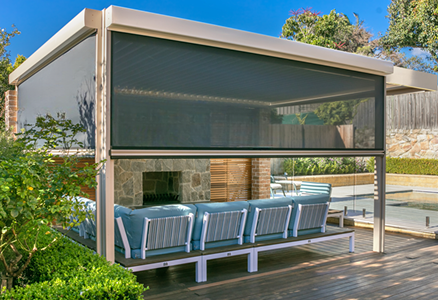
Street-facing areas — A sunscreen mesh with a lower openness factor (1–3%) provides good daytime privacy from street level while still allowing natural light into the space and a degree of outward visibility from inside.
Overlooking neighbours — In tightly built inner suburban areas such as Norwood, Unley and Prospect, where properties are close together, a higher-density mesh or blockout panel on the relevant side can create a private outdoor zone without affecting adjacent sides.
Night-time privacy — Open-weave mesh fabrics that appear opaque from outside during the day become transparent at night when interior lights are on. For alfresco dining areas used in the evening, a higher-density fabric or a blockout panel on the street-facing side is the more reliable choice.
Balancing privacy with light and views — Clear PVC blinds provide full weather enclosure and insect protection while preserving the outlook and keeping the space feeling open. They offer less privacy than mesh from close range but are popular in settings where the view is a priority.
Different sides of the same outdoor area can use different fabrics. A mesh panel on the street-facing side for privacy, and clear PVC on the garden side to preserve the outlook, is a common configuration in Adelaide suburban homes. Your Ziptrak® retailer can walk you through the options during the measure and quote.
Adelaide in practice
Common Adelaide Use Cases for Outdoor Blinds
Outdoor blinds in Adelaide are used across a wide range of property types and locations. The specific combination of weather protection and privacy needs varies by suburb, but the underlying pattern is consistent: homeowners want to use their outdoor areas for more of the year with less disruption from weather.
🌿 Inner-suburban courtyard (Norwood, Unley, Prospect)
Compact courtyards in Adelaide’s inner east and inner north are often shared with neighbouring properties on multiple sides. A combination of privacy mesh on the fence-line sides and a retractable blind on the open side gives these spaces year-round usability while managing the overlooking issue that makes them feel exposed without any coverage at all.
🏖️ Coastal balcony (Glenelg, Henley Beach, West Beach)
Coastal balconies face the dual challenge of strong afternoon sea breezes and salt air. A track-guided outdoor blind specified with corrosion-resistant hardware performs well in these conditions, holding firm in the afternoon breeze and requiring only basic cleaning to stay in good condition. Clear PVC preserves the sea view while providing weather protection when it’s needed.
🌄 Hills alfresco (Stirling, Aldgate, Crafers)
Properties in the Adelaide Hills face cooler temperatures, higher winter rainfall and exposure to southerly and westerly fronts. For alfresco areas on Hills properties, weather enclosure is the primary driver. A full-perimeter outdoor blind setup significantly extends the usable season of an alfresco area that would otherwise sit empty during the cooler months.
The Ziptrak® difference
Why Many Adelaide Homes Choose Ziptrak® Outdoor Blinds
Ziptrak® outdoor blinds Adelaide homeowners choose are the original track-guided system in Australia, and the design addresses many of the specific challenges Adelaide’s climate creates for outdoor blinds.
Fabric held in tracks against wind — Adelaide’s persistent northerlies and afternoon sea breezes are a real challenge for outdoor blinds that hang freely. Ziptrak®’s track-guided system keeps the fabric under tension within side channels, so it stays flat and sealed regardless of wind conditions, rather than lifting or billowing away from the surround.
Full heat and UV management — Sunscreen mesh fabrics block solar radiation while maintaining airflow, keeping alfresco areas cooler on Adelaide’s extreme summer days without making the space feel enclosed. Blockout fabrics with a reflective-white backing address both heat gain and full light control for rooms or covered areas where temperature management is the priority.
Rain enclosure in winter — When Adelaide’s winter fronts arrive, a track-guided blind with sealed edges keeps driving rain out of the alfresco area from the sides, not just from above. This makes covered outdoor spaces genuinely usable in winter conditions that would otherwise force everyone back inside.
No cords, no zips, one smooth motion — Ziptrak® uses a spring-balanced operating system. The blind can be raised, lowered or left at any height with a single smooth motion and no cords, ropes or buckles to manage. For outdoor areas that need to be adjusted frequently as Adelaide’s weather changes across the day, this ease of operation makes a real practical difference.
Custom-made to your opening — Every Ziptrak® blind is made to the exact dimensions of your outdoor area by an Ziptrak® retailer. Professional measuring ensures the blind covers the opening correctly and the tracks are installed to achieve the closest seal possible for your specific structure.
Common questions
FAQs: Outdoor Blinds in Adelaide
Before your appointment
What to Have Ready for Your Ziptrak® Measure and Quote in Adelaide
Having a few details prepared before your retailer visits will help make the most of the consultation and ensure you get the most accurate quote.
Know the orientation of your outdoor area (north, south, east or west facing) and which sides receive the most direct sun.
Note how exposed the area is to wind, including whether it faces a direction that receives the Adelaide northerly or afternoon sea breeze.
Identify your privacy concerns — which sides face the street, neighbouring properties or an overlooking upper floor.
Consider whether your property has any coastal salt air exposure that should be factored into the hardware specification.
Think about how you want the outdoor area to look and function — which sides need full enclosure, and whether view preservation or privacy is the priority on each side.
Note the existing structure — whether you have a roofed pergola, open deck or wall-mounted beam — as this affects how the blind is mounted and specified.
Want to explore fabric and colour options before your consultation? Use the Ziptrak® Design Your Blind tool to compare configurations for your Adelaide outdoor area.
Design Your Blind →Ready to get started?
Book a Free Measure and Quote for Outdoor Blinds in Adelaide
Connect with a Ziptrak® retailer in Adelaide for expert advice, professional measuring and a no-obligation quote for your outdoor area.
Find a Retailer Near You